


-1140x380.png)
Latest
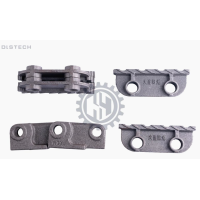
65t/h Cross-beam Type Grate
$88,888.00
40t/h Cross-beam Type Grate
$88,888.00
45t/h Cross-beam Type Grate
$88,888.00
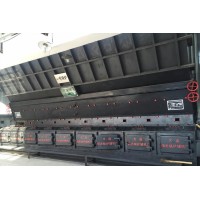
100 t/h Cross-beam Type Grate
$88,888.00
130t/h Cross-beam Type Grate
$88,888.00
Blog
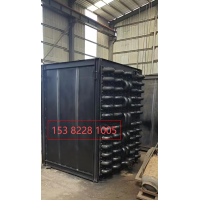
Working Principle of Cast Iron Finned Economizer
Counter-flow Heat Exchange Logic It adopts a counter-flow heat exchange structure and is installed in the flue at the boiler tail. High-temperature flue gas flows downward to scour the outer fins, while low-temperature boiler feedwater flows upward inside cast iron tubes. Opposite flow direction maintains the maximum temperature difference for stable heat transfer. Internal Water Circulation Process Cold softened feedwater enters the bottom flange header, then flows upward layer by layer through integrally cast curved elbows of each finned tube. Heat transfers continuously from cast iron wa..
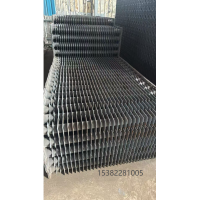
Introduction to Cast Iron Finned Economizer Tubes
1. Product Definition & Structure This equipment is a modular cast iron finned economizer, assembled by multiple independently cast curved finned economizer tubes into an integrated heat exchange box. It is an energy-saving tail heat exchange device specially for coal-fired & biomass chain / reciprocating industrial boilers. Single unit: The second picture displays a single cast iron finned economizer tube, integrally cast with dense radiating fins to expand flue gas heat exchange area. Curved connecting elbows on both ends enable multiple tubes to form a complete water circuit in se..
-200x200.png "what is boiler chain grate?")
what is boiler chain grate?
A boiler chain grate is a moving, conveyor-belt-like metal floor inside an industrial furnace that feeds solid fuel, moves it through active combustion zones, and drops out the remaining ash. It is widely used for burning coal and biomass pellets in factories and power plants. How It WorksFuel feed: Solid fuel drops from a storage hopper onto the front of the moving metal chain link belt.Combustion zones: The continuous loop carries the fuel slowly past a hot brick arch that dries and ignites it.Air control: Fans blow air up through tiny gaps in the moving metal grate bars to feed oxygen to..
Technical Analysis of Active and Driven Grate Bars for Travelling Chain Grate
The travelling chain grate is the core fuel conveying and combustion equipment for medium and small coal-fired and biomass stoker boilers. The complete grate system is assembled by active grate bars (drive bars) and driven grate bars (follower bars) arranged alternately in series. The two types of bars differ completely in structure, stress principle and operational functions. With clear division of labor and coordinated operation, they jointly realize the full-process functions of fuel conveying, ventilation combustion, sealing, anti-leakage and slag removal. Their material selection, m..
-200x200.png "Detailed Performance of Silicon-5 Heat-Resistant Cast Iron (RTSi5) Grate Bars Under High-Temperature Conditions")
Detailed Performance of Silicon-5 Heat-Resistant Cast Iron (RTSi5) Grate Bars Under High-Temperature Conditions
1. Basic Material Parameters Grade: RTSi5, national standard heat-resistant cast iron; silicon content ranges from 4.5% to 5.5%, with ferrite as the main matrix structure. Designed long-term safe operating temperature: 750℃ ~ 850℃; short-term peak temperature tolerance: within 880℃. 2. Comprehensive Performance Within the Optimal Temperature Range (750–850℃, Conventional Boiler Operating Conditions) This is its peak service condition: (1) High-Temperature Oxidation Resistance (Primary Core Advantage) A dense, intact silicon dioxide (SiO₂) protective film automatically forms on the heated..