


Detailed Performance of Silicon-5 Heat-Resistant Cast Iron (RTSi5) Grate Bars Under High-Temperature Conditions
-1140x380.png "Detailed Performance of Silicon-5 Heat-Resistant Cast Iron (RTSi5) Grate Bars Under High-Temperature Conditions")
By Alex Hu - 01/08/2026 - 0 comments
1. Basic Material Parameters
Grade: RTSi5, national standard heat-resistant cast iron; silicon content ranges from 4.5% to 5.5%, with ferrite as the main matrix structure.
Designed long-term safe operating temperature: 750℃ ~ 850℃; short-term peak temperature tolerance: within 880℃.
2. Comprehensive Performance Within the Optimal Temperature Range (750–850℃, Conventional Boiler Operating Conditions)
This is its peak service condition:
(1) High-Temperature Oxidation Resistance (Primary Core Advantage)
A dense, intact silicon dioxide (SiO₂) protective film automatically forms on the heated surface and adheres firmly to the casting exterior:
It isolates oxygen in the air and prevents continuous oxidative ablation of the base metal, avoiding large-scale scaling, peeling, thinning of the grate bars;
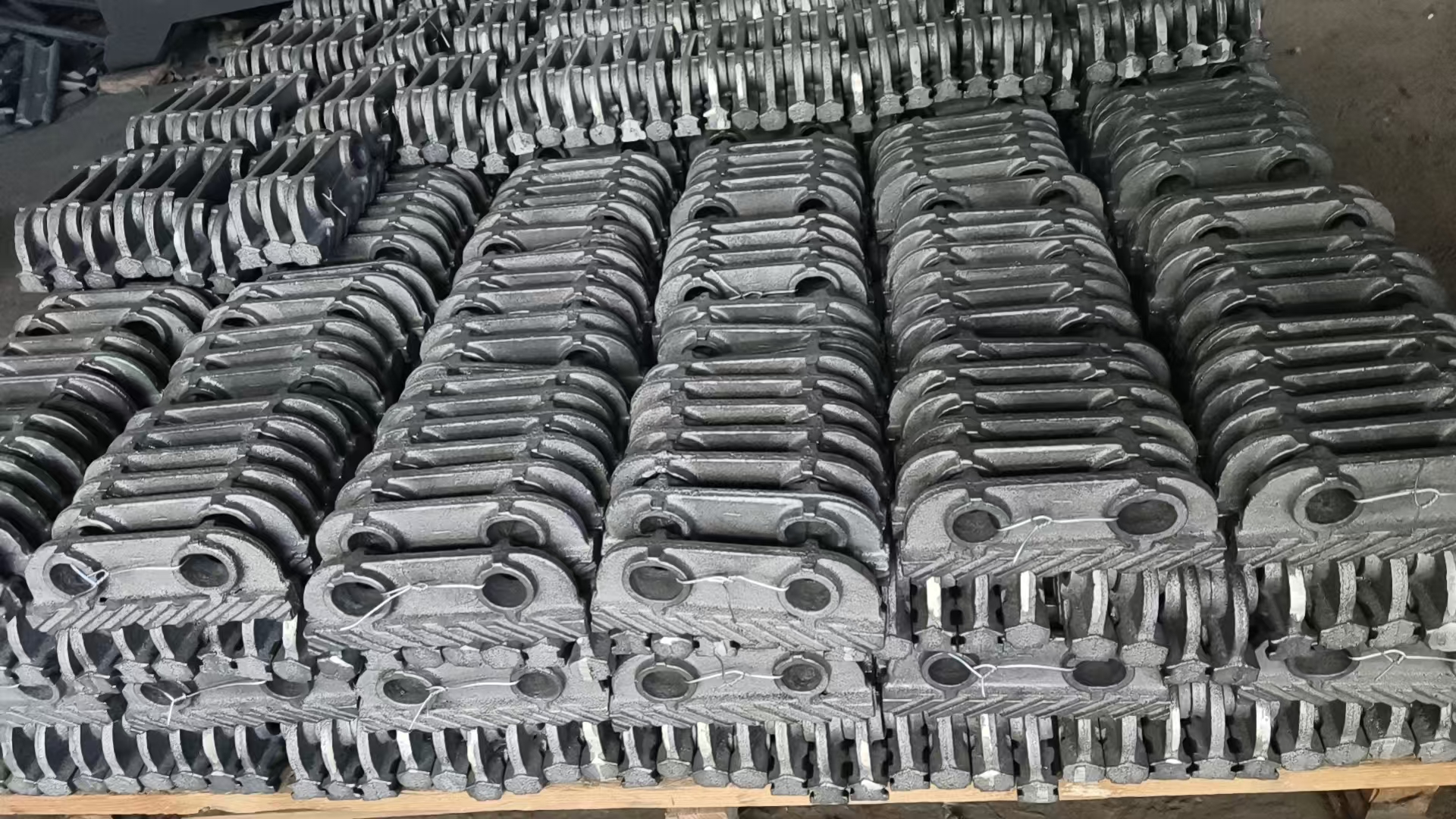
For conventional coal-fired and biomass furnace environments, the rate of wear and burnout of grates during year-round operation remains extremely low;
Compared with ordinary grey cast iron under identical temperatures, its anti-oxidation service life is 2.5 to 4 times longer.
(2) Thermal Shock Resistance (Resistance to Alternating Hot and Cold Cycles)
Temperature sharp rises and falls caused by boiler startup/shutdown, banked fire operation and intermittent heating supply:
Thermal shock resistance is superior to grey cast iron and high-chromium cast iron;
Drawback: Its toughness is inferior to ductile cast iron and cast steel;
For intermittently operated heating boilers with daily startup and shutdown cycles, cracking or breakage of grate bars rarely occurs. Nevertheless, drastic sudden chilling (pouring cold water into the furnace, massive cold air rushing into the furnace abruptly) will still lead to cracks.
(3) High-Temperature Strength & Deformation Resistance
At 750–850℃:
Minimal high-temperature creep occurs; warping and bending deformation are unlikely, so grate gaps will not widen to cause increased coal leakage;
Stable load-bearing capacity, fully competent for material laying and pressure bearing on travelling chain grates.
(4) Flue Gas Corrosion Resistance
Medium and low-sulfur conventional coal: Slight sulfur dioxide corrosion, stable service life;
Biomass fuels such as straw and wood shavings: Decent resistance to erosion by alkaline ash containing potassium and sodium, hardly prone to peeling caused by alkali metal corrosion;
Shortcoming: Sulfidation resistance is far weaker than chromium-containing heat-resistant cast iron.
(5) Wear Resistance
It boasts a moderate friction coefficient at high temperatures. Wear from reciprocating friction between hinge pins of driving chain grate bars and scouring by ash slag meets the service life requirement of 12–24 months for standard coal-fired boilers.
3. Gradual Performance Degradation Under Over-Temperature Conditions (Continuous Temperature Exceeding 880℃)
880℃ ~ 950℃
The surface SiO₂ protective film begins to soften, crack and peel off, losing its protective function:
Grate bars are rapidly oxidized and thinned, with edge scaling and peeling;
High-temperature creep intensifies, leading to overall bending and warpage of grate bars, disordered fitting clearances, chain jamming and aggravated coal leakage;
Brittleness rises sharply, and fractures occur easily under slight vibration or thermal shock;
Total service life is reduced by more than half directly.
Long-Term Operation Above 950℃
RTSi5 (Silicon 5) is completely unsuitable for this scenario: oxidation proceeds at an extremely fast rate, and the grate bars will be burnt out and scrapped within just a few months.
4. Inherent Disadvantages & Deficiencies in High-Temperature Environments
Poor Sulfidation Corrosion Resistance
When burning high-sulfur coal or inferior coal, sulfur dioxide penetrates the silicon oxide film and corrodes the base metal, resulting in pitting holes and rust pits, which drastically shortens service life. For such working conditions, low-chromium cast iron grades RTCr1 and RTCr2 perform much better.
Low Toughness, Poor Resistance to Impact and Reciprocating Extrusion
Under stressed conditions involving back-and-forth pushing, pulling and collision on reciprocating grates, brittleness further increases after prolonged high-temperature heating, readily causing edge chipping and cracking. Cast steel or ductile iron are preferred materials for reciprocating grates.
Moderate Resistance to Strong Alkaline Slag Erosion
Continuous combustion of pure straw and rice husk leads to molten alkaline ash adhering persistently to grate surfaces, which will slowly erode the outer layer under long-term high temperature.
5. Reference Service Life of RTSi5 Grate Bars Under Various Working Conditions
24-hour continuous combustion of ordinary raw coal, furnace temperature approx. 800℃: 18 ~ 26 months
Intermittent heating boiler with daily startup and shutdown: 12 ~ 18 months
Co-firing with a small proportion of biomass pellets: 12 ~ 20 months
Continuous operation at furnace temperature 900℃: Scrapped within 4 ~ 8 months
Long-term combustion of high-sulfur inferior coal: 8 ~ 12 months
Summary in One Sentence
Silicon-5 (RTSi5) delivers the optimal cost performance for conventional coal-fired and biomass travelling chain boilers operating at 750~850℃. It is durable and reliable provided the furnace temperature does not exceed the limit and fuel sulfur content is low. Once the furnace runs continuously above 880℃ or burns high-sulfur fuels, its overall performance will decline significantly.
Tags: RTSi5