


Technical Analysis of Active and Driven Grate Bars for Travelling Chain Grate
By Alex Hu - 01/08/2026 - 0 comments
The travelling chain grate is the core fuel conveying and combustion equipment for medium and small coal-fired and biomass stoker boilers. The complete grate system is assembled by active grate bars (drive bars) and driven grate bars (follower bars) arranged alternately in series. The two types of bars differ completely in structure, stress principle and operational functions. With clear division of labor and coordinated operation, they jointly realize the full-process functions of fuel conveying, ventilation combustion, sealing, anti-leakage and slag removal. Their material selection, matching and wear laws directly determine the operational stability, service life and energy consumption of the boiler grate.
1. Core Definition and Functional Division
1.1 Active Grate Bar (Core of Driving and Force Bearing)
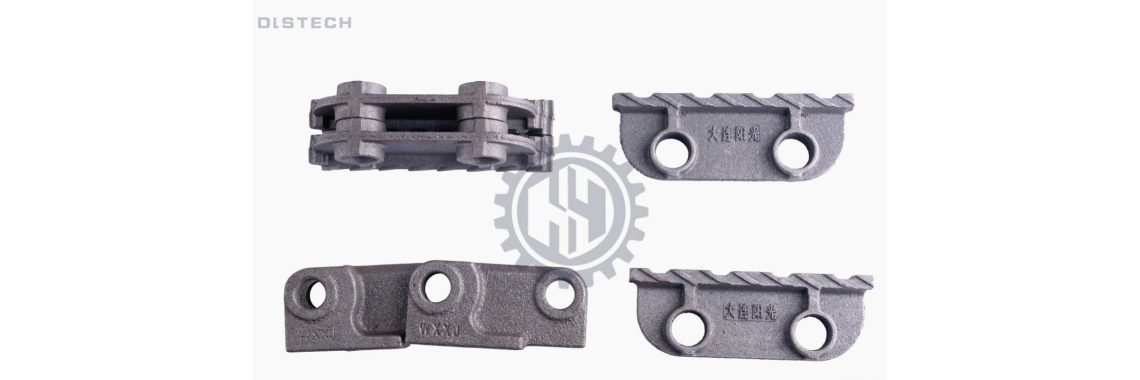
As the force-bearing and traction framework of the entire chain grate, the active grate bar is equipped with pin hinge structures, connected in series into an integral chain belt via round steel tie rods, and meshed with the front sprocket for transmission. It bears the overall tension, friction and mechanical impact of the grate, driving all driven bars to move synchronously and realizing the cyclic operation of the whole grate. With a small quantity and large single load, it is the key mechanical stress-bearing component of the grate.
1.2 Driven Grate Bar (Core of Sealing and Combustion)
Without independent transmission structure, the driven grate bar operates passively under the traction of active bars. Densely arranged between active bars, it covers most of the grate area. Its core functions include supporting fuel laying, forming uniform ventilation gaps, sealing air chambers, preventing cross-air leakage and coal leakage, and ensuring stable furnace combustion. Large in quantity and wide in coverage, it is the high-temperature combustion component directly exposed to flame and slag.
2. Structural and Appearance Differences
Active Grate Bar
- Thickened structure with high rigidity, equipped with double-ear pin holes for rod connection and sprocket meshing
- Narrow plate surface and high thickness, excellent resistance to tension, distortion and mechanical fatigue
- Relatively small ventilation gaps, prioritizing structural strength and transmission stability
- Robust overall structure, resistant to deformation and fracture during long-term continuous mechanical operation
Driven Grate Bar
- Wide and thin plate surface without transmission hinge structure, adopting flat lap or S-shaped lap sealing design
- Closely interlocked to form a labyrinth sealing structure, effectively blocking air cross-leakage and coal dust leakage
- Uniform and regular ventilation gaps to match primary air distribution and ensure sufficient oxygen supply for fuel beds
- Covers the main combustion area, directly resisting high-temperature flame radiation and slag scouring
3. General Industry Material Matching Standards
Materials for Active Bars (Prioritize Toughness, Tensile Strength and Impact Resistance)
Active bars focus on mechanical performance with auxiliary high-temperature resistance. The industry standard material is malleable cast iron KTH350. Ductile iron QT450/QT500 is adopted for high-strength working conditions, and carbon cast steel ZG230-450 for heavy-duty and high-temperature scenarios. Featuring good toughness and high tensile strength, it avoids brittle fracture and deformation caused by reciprocating traction and mechanical vibration, suitable for 24-hour continuous transmission operation.
Materials for Driven Bars (Prioritize High-Temperature Resistance, Oxidation and Corrosion Resistance)
Driven bars work in long-term high-temperature combustion environments and prioritize thermal stability. Grey cast iron HT200 is used for conventional working conditions; silicon-5 heat-resistant cast iron RTSi5 (optimal at 750-850℃) is the preferred choice for mainstream coal and biomass boilers; chromium heat-resistant cast iron RTCr2/RTCr16 is applied for high-sulfur fuel and high-temperature furnace conditions to resist high-temperature oxidation, slag corrosion and thermal shock cracking.
4. Core Functions and Operational Performance
Core Functions of Active Grate Bars
1. Power traction: Meshes with sprockets, bears the tension of the entire chain belt, and drives cyclic grate operation and backward fuel conveying
2. Structural stabilization: Fixes the overall spacing and shape of the grate to prevent belt deviation, slackness and jamming
3. Mechanical loss resistance: Withstands reciprocating pin friction and sprocket meshing impact to ensure stable transmission
Wear characteristics: Rarely burnt; main faults include abrasion, loosening, deformation and fracture (mechanical wear) with longer service life.
Core Functions of Driven Grate Bars
1. Fuel support: Supports coal and biomass fuel beds in large areas to ensure uniform fuel distribution
2. Air distribution and combustion: Uniform ventilation gaps realize zoned air supply for stable drying, ignition and burnout
3. Sealing and energy saving: Blocks air chamber cross-flow, furnace air and coal leakage, reducing fan power consumption and fuel loss
4. High-temperature resistance and anti-corrosion: Resists high-temperature flame and slag erosion to maintain long-term thermal stability
Wear characteristics: Low mechanical loss; main failures are high-temperature oxidation, scaling, corrosion and thermal shock cracking (thermal wear), requiring more frequent replacement than active bars.
5. Service Life and Replacement Rules
- Active grate bar: Service life of 2-3 years under normal working conditions; main failures are pin hole wear, tensile deformation and brittle fracture with low replacement frequency
Tags: Active Bar, Driven Grate Bars