


Reciprocating Biomass Grates: Core Differences Between S-Type, Wide Flat & T-Type Grate Bars

By Alex Hu - 01/08/2026 - 0 comments
These three most widely used reciprocating grate bars differ entirely in interlocking profile structure, air throughput, ash leakage performance, fuel stirring & pushing effect, and applicable fuels. Detailed breakdowns and selection guidelines are listed below for your presentation to overseas customers.
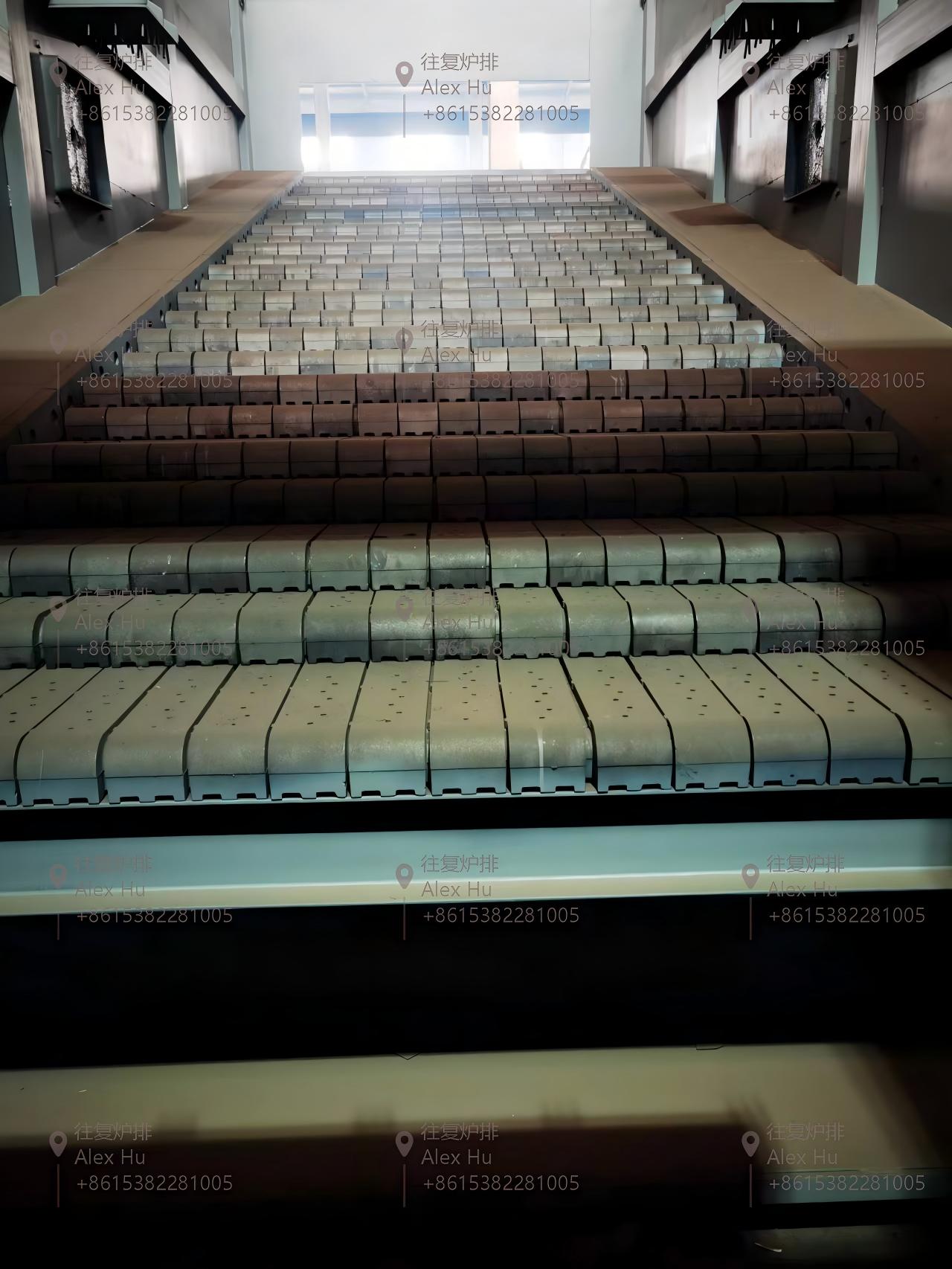
1. S-Type Grate Bars
Structural Features
Curved S-shaped surfaces on both sides interlock with adjacent pieces. When movable and fixed grate bars slide alternately, the overlapping surfaces form a continuous labyrinth seal.
Advantages
The lowest material leakage rate; ideal for fine granular biomass including rice husk, wood sawdust, chopped straw and palm kernel shells; tiny particles rarely fall through gaps
Gentle fuel stirring occurs during sliding to agitate the fuel bed slightly
Uniform gaps ensure stable primary air distribution
Resists material jamming; top choice for high-dust operating conditions
Disadvantages
Narrow air gaps lead to relatively low total air volume. Insufficient oxygen supply tends to occur when burning thick fuel beds of high-moisture and large wood chips.
Application Scenarios
Medium & small biomass steam/hot water boilers burning predominantly fine, dusty fuels with strict requirements on low slag leakage.
Widely equipped on 6–25 t/h SZW series biomass reciprocating grate boilers.
2. Wide Flat Grate Bars (Straight Lap Joint Flat Grate Bars)
Structural Features
Extra-wide flat plate surface with large overlapping lap areas; each single piece covers a broad span of the grate width. Air slits are concentrated along the front edge.
Advantages
Larger coverage per bar means fewer total pieces required for the same grate width, reducing later maintenance and replacement workload
High load-bearing capacity, suitable for bulky fuels such as wood logs, large wood chips and bark
Slightly lower manufacturing cost with abundant stock availability
Disadvantages
Inferior interlocking sealing compared with S-type bars, resulting in significantly higher ash leakage for fine fuels
Minimal agitation to the fuel bed with virtually no automatic clinker breaking capability; prone to surface crusting and localized oxygen deficiency
Application Scenarios
Fuels dominated by bulky timber with little fine powder; burnout zone tail grates (solely for ash conveying); low-cost boiler renovation projects.
3. T-Type Grate Bars (T-Rib Reinforced High-Ventilation Design)
Structural Features
T-shaped cross-section: the top surface bears fuel weight, while vertical ribs on the underside boost air cooling. Straight-through air passages are formed between adjacent grate bars.
Advantages
Maximum air throughput and optimal air permeability; delivers ample oxygen for thick fuel beds and high-moisture biomass to achieve complete combustion
Large rear cooling ribs offer efficient air cooling, outstanding high-temperature resistance and long service life in the main combustion zone with minimal burnout damage
Strong tumbling agitation during fuel pushing, perfectly suited for fuels prone to coking
Disadvantages
Oversized gaps cause the most severe fine biomass leakage. Not recommended for full installation when burning pure rice husk or fine wood dust.
Application Scenarios
High-moisture wood chips, bark and straw briquettes; main combustion zones of large reciprocating biomass grates; working conditions with coarse fuel particles and low fine powder proportion.